The Connection Between Physical Touch and Emotional Healing

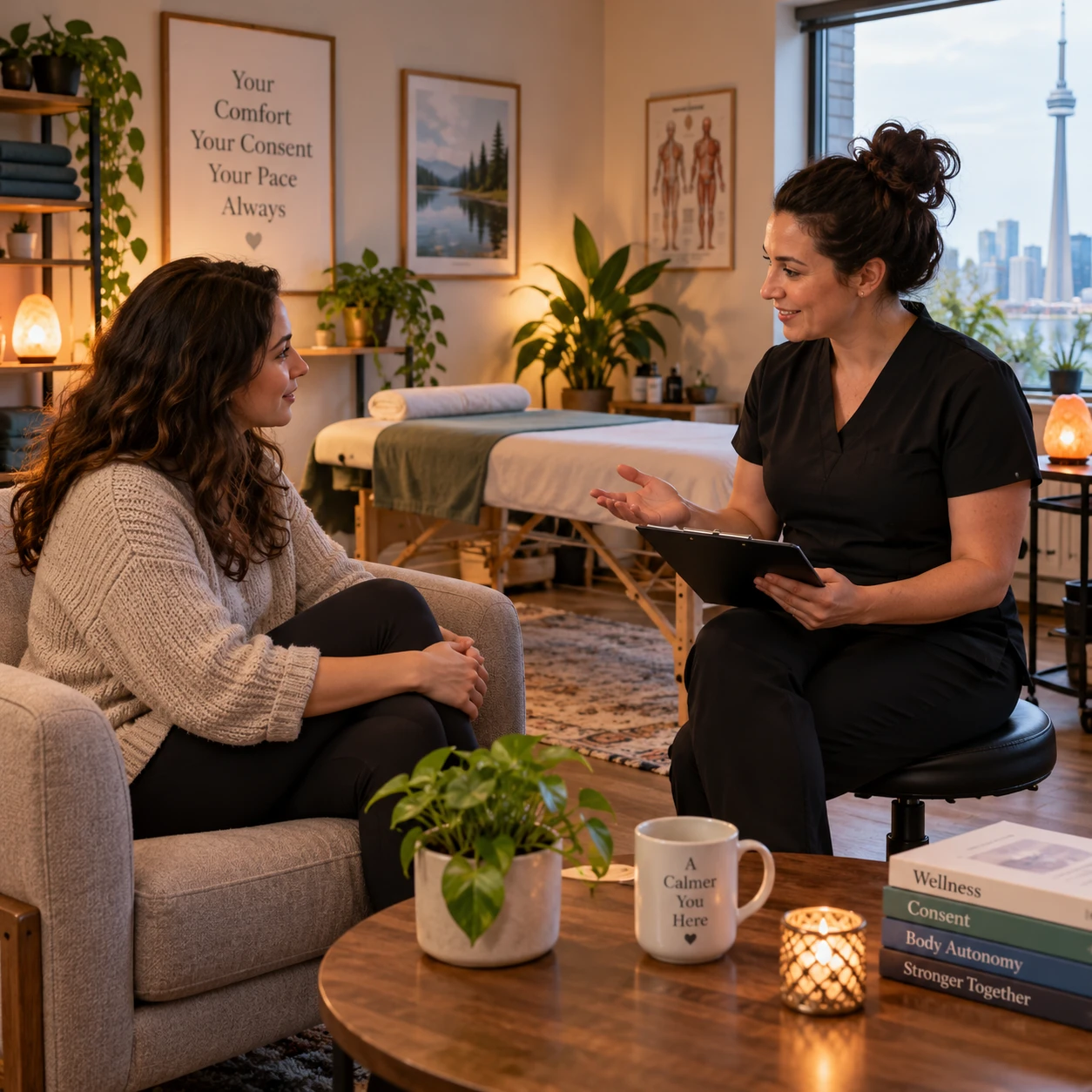
Physical touch can be a source of comfort, connection, and reassurance. For some people, safe and consensual touch may support emotional healing by helping them feel more present and cared for. For others, touch may feel uncomfortable or unsafe. Personal history, culture, health, and individual preference all matter.
Understanding the connection between touch and emotional well-being begins with choice. Touch is never something a person owes another, and it is not a cure for emotional pain. When appropriate, massage therapy and psychotherapy can each contribute to wellness in different ways, with clear boundaries and realistic expectations.
Why touch matters to emotional well-being
Physical touch may support emotional well-being by offering comfort, connection, or a sense of being accompanied. Its effect depends on the person, the relationship, the circumstances, and whether the touch feels welcome.
Humans communicate through more than words. A reassuring hand offered by someone trusted, for example, may help a person feel less alone during a difficult moment. That same gesture could feel intrusive if it is unexpected or unwanted. Meaning and consent shape the experience; touch itself does not guarantee comfort or healing.
Emotional healing is usually a gradual process of understanding feelings, building coping skills, and finding support. Touch may be one small part of that process, alongside conversation, rest, supportive relationships, and professional care when needed. It can also bring up memories or strong emotions, particularly for someone with a history of trauma. There is no single correct response.
A useful starting point is to ask: Do I want this contact right now, from this person, in this setting? If the answer is no or uncertain, declining is enough. A person does not need to justify a boundary to make it valid.
How safe touch may support stress regulation
Safe, wanted touch may help some people feel calmer and more grounded, which can support stress regulation. The response varies, so comforting touch should be viewed as a possible aid rather than a guaranteed way to reduce distress.
When someone feels tense or overwhelmed, noticing a steady, gentle sensation can bring attention back to the present moment. A hand resting on one’s own chest, holding a warm mug, or receiving a welcome hug may help some people pause and check in with their breathing and surroundings. These are options, not prescriptions.
Stress can affect the body as well as thoughts and emotions. People may notice muscle tension, shallow breathing, restlessness, or a sense of numbness. Gentle, consensual touch can sometimes make it easier to notice these sensations. It may also feel activating or unpleasant, especially when a person is already on edge. In that case, stopping or choosing a non-touch grounding activity is sensible.
Try a simple check-in before and after any touch-based self-care: name what you notice in your body, rate your comfort from 0 to 10, and decide whether to continue. You can change your mind at any point. If distress feels intense or persistent, a qualified mental health professional can help identify suitable supports.
The body’s role in emotional healing
Body awareness can help people notice how emotions show up physically and respond with greater care. It does not require interpreting every sensation or uncovering a hidden meaning.
Anxiety might come with a tight jaw; sadness may feel heavy or tiring; anger can bring warmth or muscle tension. These patterns differ from person to person, and physical sensations can also have medical causes. Treat them as information to observe, not proof of a particular emotion or diagnosis.
A gentle body-awareness practice is to pause for a minute and notice three things: where you feel contact with a chair or the floor, whether any area feels tense or relaxed, and what kind of support would feel helpful. You might choose a stretch, a walk, a glass of water, a conversation, or simply more space. Touch is only one possible response.
For people who find body-focused attention difficult, keeping the eyes open and orienting to the room can feel safer than turning inward. A therapist can adapt exercises to a person’s needs. There is no requirement to tolerate discomfort in the name of healing.
Massage therapy and emotional wellness
Massage therapy may support relaxation and body awareness for some clients, but it is not a substitute for psychotherapy or medical care. Its purpose and scope differ from mental health treatment.
In Ontario, massage therapy is provided by Registered Massage Therapists (RMTs), who are regulated health professionals. A session may involve an intake conversation, discussion of goals, and agreement about areas to treat and pressure. Clients can ask questions, request modifications, or stop the session. Massage may help a person make time for rest and notice physical tension, but emotional effects are not predictable.
Psychotherapy focuses on mental health through approaches such as therapeutic conversation and evidence-informed interventions. It may help someone explore distress, relationships, trauma, or coping strategies. Massage therapy focuses on hands-on care within the practitioner’s scope. Some people choose both, but the providers should not blur their roles or promise that massage will resolve psychological concerns.
Before booking, ask what the session involves, what clothing is expected, how draping works, and how consent is checked. You can also explain any areas you do not want touched. A qualified practitioner should welcome these questions and respect your decisions.
Consent, boundaries, and feeling safe
Touch should be voluntary, clearly discussed, and adjusted to the person’s comfort throughout the experience. Consent is specific and ongoing; agreeing to one kind of contact does not mean agreeing to another.
In a professional massage setting, you can discuss pressure, positioning, draping, and areas to avoid before treatment begins. You can ask the practitioner to explain what they are doing, request a pause, or end the session. You do not need to provide a personal history to set a practical boundary.
Trauma-sensitive care means taking a person’s sense of control seriously. A practitioner can offer choices, explain steps before proceeding, and avoid assuming that touch is welcome. If a provider dismisses a boundary, pressures you to continue, or makes you feel unsafe, you can stop the session and seek another provider.
- State preferences plainly: “Please avoid my shoulders” or “I would like lighter pressure.”
- Agree on a clear way to pause or stop, such as saying “stop” or raising a hand.
- Check in with yourself during the session; your comfort can change.
- Choose a non-touch option if that feels better today.
Finding an approach that feels right for you
The right approach is the one that respects your comfort, goals, and boundaries. You can explore touch-based care gradually, choose psychotherapy, or decide that non-touch support suits you better.
If you are considering massage therapy, contact the RMT before your appointment and ask how they handle consent and adjustments. You might begin with a short conversation about preferences, without committing to hands-on treatment. A good practitioner will let you make an informed choice and will not treat hesitation as a problem to overcome.
For psychotherapy, ask a prospective therapist about their training, approach, and experience with your concerns. Psychotherapy does not require physical touch; sessions are generally based on conversation and other agreed therapeutic methods. If you are already working with a psychotherapist and considering massage, you can discuss how to keep the supports complementary without expecting either provider to replace the other.
Non-touch options include grounding through the senses, gentle movement, breathing exercises, time outdoors, or talking with someone you trust. These practices do not work identically for everyone, either. Experiment gently, keep what feels supportive, and stop what does not.
Frequently asked questions
Can physical touch help with emotional healing?
It may help some people feel comforted, connected, or more grounded when it is safe and consensual. Touch is not a cure, and it can feel uncomfortable or activating for others. Individual choice and context matter.
How can massage therapy support emotional well-being?
Massage therapy may offer a structured opportunity for relaxation and body awareness. Emotional responses vary, and an RMT does not provide psychotherapy unless separately qualified and working in that role.
What if touch feels uncomfortable or unsafe?
You can decline touch, ask for a change, or stop a session at any time. Consider non-touch supports, and choose a practitioner who respects your boundaries without pressure.
Can massage therapy replace psychotherapy?
No. Massage therapy and psychotherapy have different purposes and scopes of practice. Massage may complement other care for some people, but it does not replace psychotherapy, medical assessment, or treatment when those are needed.